Tour Editorial · 5 February 2026
A conversation with Enobong Albert: On learning through failure, killing your darlings, and discovering his voice
Artist Feature
By Tour Editorial and Soala17 minute read
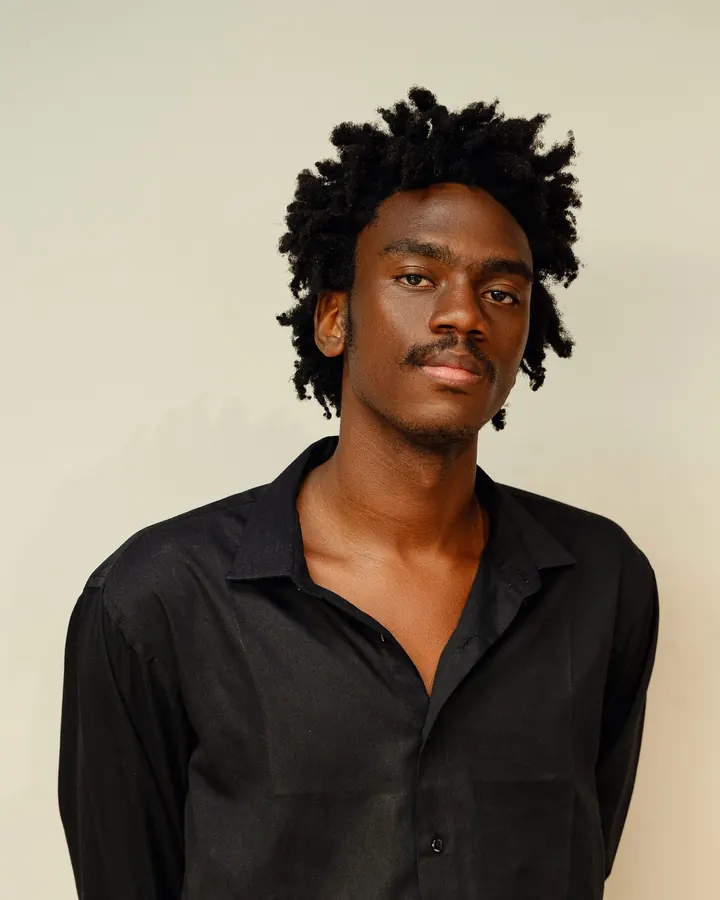
On the morning of this conversation I arrived, costume in hand, to a busy compound where a Basquiat-haired Albert was preparing his cast and crew for the first scene of the day. This compound was one of many sets for Mama Africa, the latest in what has become a rich portfolio of short films over the past four years. It was a few weeks before his previous film, Song of Solomon, would play at S16 Film Festival—the first theatre screening of his career. But Albert was especially excited about Mama Africa, which he’d been planning and writing for a year and intended to shoot before nightfall.
There weren’t any elaborate sets. Mama, the main character, was to be captured in the live current of Lagos city life: a neighborhood with children playing football, a chaotic intersection, a bus stop, a compound with a small bungalow. We’d arrive at a location he’d scouted days before, and the actors would blend in and play out the scene. Some locations were easier than others. Naturally, a bus stop with agitated drivers and conductors comes with its own challenges.
The cast was from a theatre group Albert met two weeks prior and some other creatives who just wanted to be part of the project. An applause would conclude every scene, during which he would shake hands and thank everyone on set. We’d then make our way to Mama’s next destination—the ladies and whoever else could fit in the black Sienna Albert’s brother was driving, the rest of us walking. During these walks Albert would excitedly ask me what I thought of the previous scene or explain what was coming.
Evening fell just as we wrapped the last scene. Satisfied, we retired to the crew’s studio for food and drinks. And through the buzzing of elated talking and spoons clinking against plates, Albert and I sat for what felt like the continuation of a day-long conversation. Forgive our meandering.
By Soala Iyalla
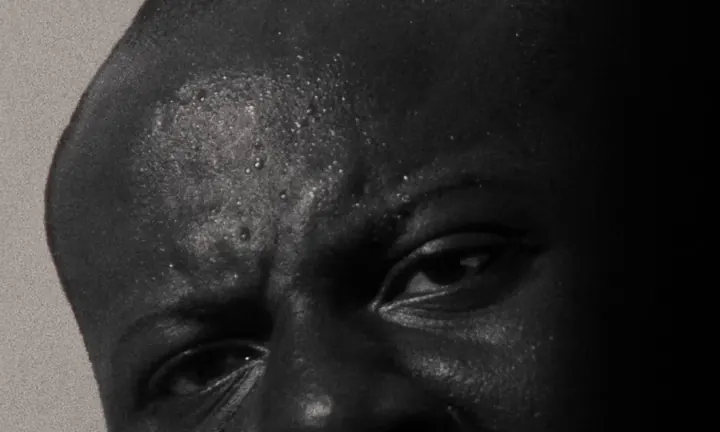
We shot a film today, how do you feel about it so far?
This is a bad question for me because I’m in that mood where I feel like everything we’ve done is terrible. I remember the feelings I had at different points on set where I felt like, “Oh, this is mad,” but right now, when we’ve wrapped for the day and I have time to think... It’s a familiar feeling though. For every project I’ve done, I’ve always felt like this.
But it ends up good at the end, right?
Yeah, but I can’t beat the feeling, even when I try to refer to past experiences and say, “Okay, I always feel like this after shooting.” It doesn’t help.
What drew you to film?
I started watching films in university because I was depressed. What took up my time were the more accessible, popular films. But over time, and I think this is true for everybody, if you consume enough cinema, you’ll eventually get to the more artistic stuff. And then you also started feeding me a lot of cool films.
Around COVID, right?
Yeah, exactly. It’s a funny story because my mom owns a school that was affected, so at the time she needed e-learning content. We were shooting videos for her school. They bought a camera, and that was the last time I programmed. I remember wondering if I was going to come back to coding because I really loved coding. To help my mom shoot, I had to learn VFX. I started going through tutorials because I was interested in making Marvel-type films. That was the idea, but I ended up on the indie, more artistic side of things—both because I like it more and because I don’t have any money [Laughs].
I remember you didn’t come back to school.
For a long time I knew I was going to drop out, but I was looking for an opportunity to do it. I waited until our third-year internships because I knew I could just go to a film company. So I did my internship at company called Anthill Studios. They’ve made Yoruba epics like Jagun Jagun—they’re big.
I stayed through the internship, and when it was time to go back to school, my parents were like, “All right, what are you still doing here?” [Laughs] I remember I told them I was dropping out and my dad was sad. He eventually became harsh, but at that point in time, he was a bit depressed. My mom—I expected her response because she can be over the top sometimes—but I was shocked seeing my dad like that. But he’s a lot calmer now. Even with this film, he’s been managing the money and doing all the accounting. I’m pretty sure I’ve gone over budget [Laughs].
How did you start making films?
After consuming films for a while, I started to get ideas for things I could make myself. I’d been writing screenplays in school, and I wrote one in particular for a competition. I didn’t know anything about directing. Maybe I saw the film in my head, but I had no skills whatsoever to get it out. When I came back from school that break, I didn’t even know how to edit. I just wanted to shoot so I went looking for a camera rental. I found a guy who gave me equipment for free for whatever reason. I bought food for the crew sha.
The film couldn’t get made, and that was the time I promised myself to really learn—because we got to set and the guy asked, “What’s the shot?” And I was like, “What do you mean? Just act now.” [Laughs] When he started talking about close-ups and all that, I was like, “Oh, there are techniques I really need to understand.” Obviously it ended badly because my friends didn’t show up to act. It was a mess. Some shots we had to get in the day, we ended up shooting at night and trying to add sunlight in the editing room [Laughs].
I remember I started editing, and I just deleted everything because I was angry. I was afraid to make a film for a while. And I was waiting for more competitions because I thought I was special—I’d enter and win. So the next film I made, Let’s Get Together, was for another competition, and I didn’t win.
How’s your thought process different now compared to when you were starting out?
Now I know that there’s a lot that I don’t know. I’m now more concerned with making the kind of films I want to make. Most of my work so far has been serious dramas, but I think I’m more interested in comedy, and I’m trying to do more of that.
I like the films of old Nollywood—character-based films. Osofia is a character. Ibu is a character. I think we’ve lost that in Nollywood. But obviously, I’m looking to add a more artistic approach to it.
What’s your writing process look like?
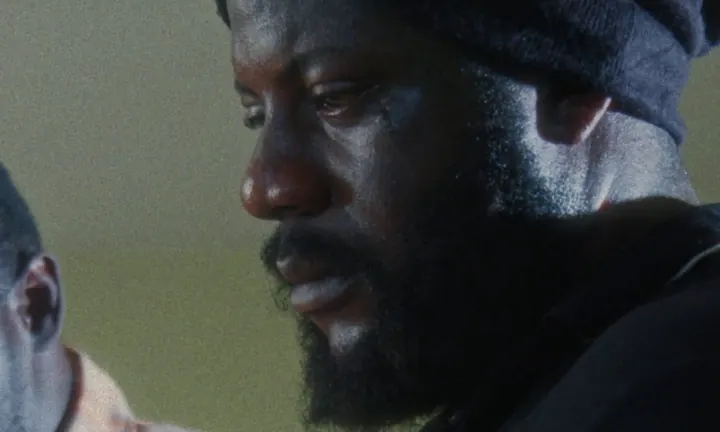
My writing really takes time. For this one, Mama Africa, I wrote about ten drafts, and it took me over a year to finish it—largely because I didn’t have money. But thank God I didn’t have the money, because it let the piece breathe. The last film I made was Song of Solomon, which took me about four months to write. So it’s taking me longer to write and then shoot.
There was a period I was making short films every month, and now I see that period as me preparing myself. It was after that first disaster, and I was learning techniques and still couldn’t make anything I liked. After one film I especially hated, I thought, “Maybe this isn’t for me,” and I was scared to make any films again for another year.
So what came after that year?
It was Red and Blue Lights Flashing. I was not good at composition yet, but I started getting my confidence. It’s why I can’t shoot without storyboards now. I need to know exactly what the shot is going to be, even though we might eventually change. I look at people who don’t use storyboards like wow, you have mind sha.
How did you start working with Fatherland?
I had been at Anthill for a while after I dropped out, and it was nice. But my parents hated it because they thought Anthill was what made me leave school. One day they even showed up to the studio, and the respect level for me just dropped. I remember people started being like, “Oh, have you told your mom about this? Does your mom know you’re coming? Make sure you tell your mom to sign this.” It was crazy, but I still liked it because I loved working on films with them.
How were you working with them?
I was a directing assistant, and they helped me with my films. They had equipment and sets, so I could shoot in their backyard. Niyi Akinmolayan was the top dog and then he had prodigies, so I was a prodigy to one of the prodigies. That was the guy supporting me, saying, “I know how you feel. All right, come, let’s write this or let’s shoot that.”
But then one day I went to the cinema and came out to like twenty missed calls from him. He was like, “I’ve washed my hands of you.” Apparently my mom called, and they had a huge argument. I was just like—I think that was the first time I changed it for for my mom. And since then they didn’t bother me about school again, but I couldn’t go back to Anthill after that. I was depressed, rotting at home, just watching films and sleeping.
One day my brother just comes to me and says, “Someone’s shooting at our backyard.” So I walked there and I just stood. They were wrapping—it was evening. I saw Akinola Davies Jr., who’s the director of My Father’s Shadow. He’s a really cool guy. He always fist bumps everybody on set—cast and crew—to say thank you. He probably thought I was part of the crew and came up to me, and I was a little starstruck. So I told him I made films and showed him The Bowing of a King. He asked me to start coming on set, and the rest is history.
And what were they shooting at the time?
My Father’s Shadow.
And you were with them for the rest of the shooting?
Yeah, I was his shadow, much like what I was doing at Anthill. So I was just learning as much as I could. Much later they asked me to come work on a documentary. I actually raised the money for this film from the work I did with them. I was surprised because, honestly, I’d do this thing for free—I’d pay you guys to let me work with you. And thinking about it now, life is so weird. Everything lined up perfectly, event after event.
How’s the experience been at Fatherland?
It’s been really nice. I hope they don’t fire me because they’re very professional and I have some work to turn in [Laughs]. One thing I’ve learned from them is that if I want to make anything good, I need structure. And I really need to adjust to that if I want to make a feature film.
When you start shooting, how much of it is spontaneous?
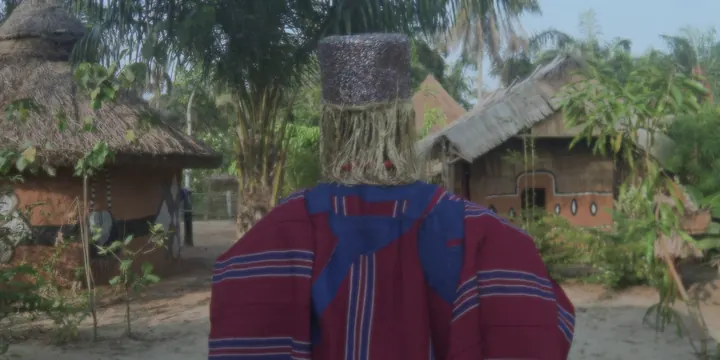
When I’m writing, it’s important to know the story. Why am I writing this story? If you know that, you can change things because you know what the film is truly about. That thing that happened with the conductor today—it’s a good idea, but it does not serve the story. You can dismiss things sometimes, or you might figure out something that can help. It goes both ways. So I need to understand what the story is first before I shoot, even before I write. With this film, I know that it’s about the absurdity of society, so everything I did was informed by that.
You have a particular intention, you come to set, and the actors are not doing what you have in mind. How do you handle that?
On bigger productions they have readings before the shoots but we don’t have that luxury. We just audition some of the roles. But as I said before, when I make changes, I already know what the story is about. I know what this scene is about. I know the intent of the scene, so anything I’m changing, I know it’s not affecting the overall intent—because as the writer and director, I see the full vision.
Things we can make exceptions for are the things that are not important. They don’t drive the story, they just support it a little bit. If it’s wasting, or the actor is not doing it right, or it’s going to be a burden on the entire scene, I’ll remove it because it’s not working. But there are some things that have to work. As the person who brought the idea, you already know what’s essential, or you can find ways to make it work.
I think over time I learned this. Two years ago I would have insisted we shoot it exactly no matter what. But now I’m understanding.
Have you ever had to change those parts of the story that are important—that are unchangeable—because of external factors?
In Song of Solomon, we changed that story. There’s the first version—that was the one you watched. Now there’s a second version that we edited. I think that was where I learned to not put my heart into everything. There is a saying: kill your darlings. Let go of some things. If you see the new version, we cut out the entire first act—with them in the meeting and all that. I had to cut it all out. But it’s a different story now, still the same idea. If you know the intent of the story, you can always reshape it.
The new version is easy to consume. That’s another style I’ve evolved to. I’ve learned to make things easy to consume. Because every decision I make in the film is in my head. Sometimes things I see in my head might not be the things other people see. As the writer, you’ll be like, “This means this. This means this.” But people aren’t seeing it that way. So I’m thinking of the audience now, to be honest. I’m thinking about how they consume it.
Do you ever experience creative block? Writer’s block?
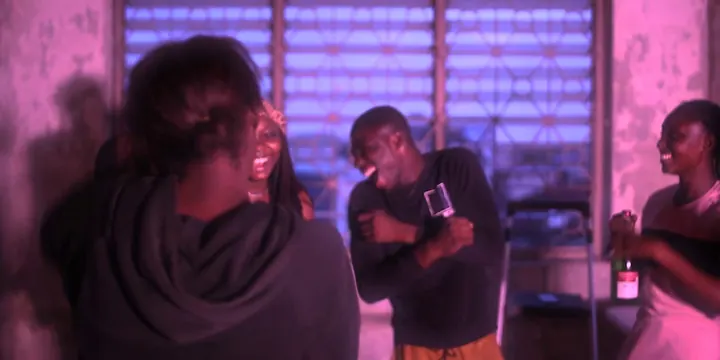
I was suffering writing Mama Africa. So the first version was written because I felt like I could raise the money. I had people that were ready to invest in me. So I was writing with the freedom of money not being the problem. And then when I started getting all the feedback—”Oh, we liked it, but change this, change this, change this”—I just lost the idea of the story. And then the burden of trying to raise money for the film, trying to please the people giving me money, trying to make a story that costs money as well. Because it’s their money, you know. They need to have some creative input.
There was a time someone gave me feedback and I was like, “This person does not understand the idea.” But then over time I realised they were right. And then I started questioning myself—have I been wrong? What if I’ve been wrong about other things too?
When did you know you were satisfied with the version you had?
When I started getting feedback that aligned with my intention for the story. That’s when I knew it was right.
I also didn’t have money, so maybe the universe wanted me to feel that way before I got the money. Fatherland didn’t hire me until I was satisfied with the story. Remember the first time I sent it to you? You didn’t give me the response I wanted. You saw Mama as a spiritual being, but that’s not what I wanted. But when I sent the second version, you understood it, and other people too. When I sent that version, it clicked—the exact experience I wanted them to feel. That was exactly the response they gave me. And that’s when I actually got the money for it. It’s so weird.
Do you experience creative blocks while shooting?
No. I don’t go to set if I’m not ready. That can’t happen because I don’t have money [Laughs]. There’s no time to waste. So I plan everything.
Even unnecessary things. I think about what can go wrong. I’ll just sit down for one day and go through it—what can go wrong? Because as I’ve told you, I was scared to direct for a while because of the failure. I was doing rubbish. So I don’t go on set if I’m not prepared.
Do you think you’ll ever get to a stage where you can just go out with the crew and try and see what works without a solid plan? I read about this Italian director, Antonioni, who would just go out with his crew and they’d figure out the location and everything that day and shoot the scenes.
Even Wong Kar-wai. I think in In the Mood for Love, he just writes the script in the morning and then guides them. The morning they were about to shoot, he’d just write, because they shot for over a year or something. So I think it’s still the same thing we’re doing. It’s just that my style is—I want to be professional. I’ll take a year to prepare myself. Wong Kar-Wai will shoot bit by bit over a year. It’s almost the same thing, just in different directions. I’m not Wong Kar-Wai, but yeah.
Out of all your films so far, which one is your favourite?
It’s actually this one we just shot, because it’s the closest to what I want to do as a director: feature film comedy. Other things I’ve been making are just exercises. This film feels like what my future films will feel like, basically.
What about scenes or shots or sequences from all your films? Do you have any that you’re particularly proud of?
You want me to pick a favourite child, and I don’t like it [Laughs].
So you actually have a favourite?
I like this scene in Song of Solomon—the opening scene, the version you watched, where the pastor preaches. I like the choreography of how the scene just plays out every time.
So I told you I watched Touki Bouki some weeks ago. All year I’ve been watching European films and I like them. But when I saw Touki Bouki, it felt like home. Most of your films are based on Nigerian culture and social life. Has that been a conscious choice, or are you just drawn to those kinds of stories?
I’ve just been shooting ideas that came to me. But this is my most “me” film. And yeah, I think there’s a texture to Africanness. There’s a way African films are made. There’s a bit of it in this film.
For this one, I was conscious of making it about society and channelling the energy I got from African cinema. But for the others, it was not like that. I was just figuring it out.
Which African directors and films are your favourites?
Have you seen Hyena? That’s one of my favourites. Atlantics—I think Atlantics is the best African film ever. It’s by Mati Diop. She’s the niece of Mambety. I think that’s one of the best films ever made. Ousman Sembene also did a film about Camp Thiarroye. It’s about how the French army killed Burkina Faso soldiers that helped them fight in World War II because they didn’t want to pay them. That one was great too. And then Timbuktu—Just watch the trailer and you’ll see what I’m talking about. There’s even a mad woman in it that sees signs, like Touki Bouki. He also did a film about a courtroom in an African backyard where the World Bank is on trial—I can’t even explain it, you have to watch it.
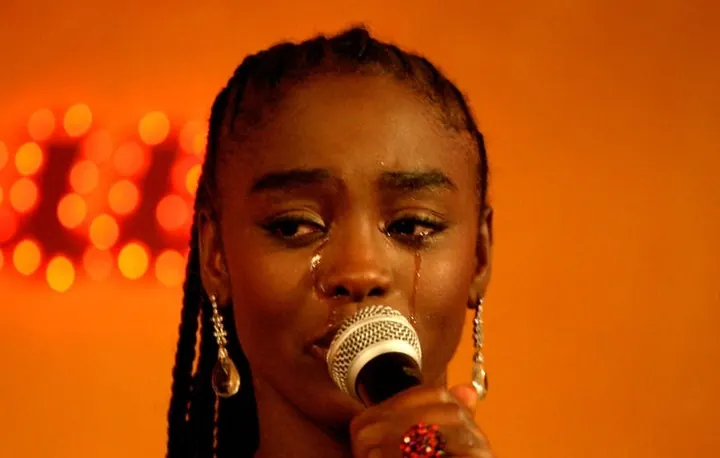
Actually, when I was preparing for Mama Africa, somebody gifted me a novel to read. There was a madman in it that sees visions and signs, that type of thing. So that was also part of my preparation for making this.
What was the book about?
The Fisherman. It’s about four siblings, and a madman prophesies that they'll kill each other. His prophecies are always right, so even though they're brothers, the idea takes hold. They start asking, "Is it him? Is it this one?" And the madness of waiting for it to happen is what actually makes it happen. Maybe it's the madman's fault for saying it at all. It’s actually set in Ogun State in 90s. There’s the backdrop of the MKO election.
Do you think you’ll read more to influence your writing?
I can only have so many ideas that are personal to me. Eventually I have to reach out and get ideas and new experiences from other people. There’s only so much of me I can put into my own filmography.
So what’s next? Long term, what do you see?
I have ideas down. I know the next film I’m working on after this. But I can’t make it right away because I need to be at a certain level—it’s more difficult than this. The next one always seems harder and harder. So that’s why I’m hoping I’m able to achieve this, get some backing. Right now, the only thing I hope for my films is that they create the ability to make the next one. It just makes the next one more feasible.
Where can people find your work if they want to see it?
Those other films—they feel outdated to my style. The Bowing of a King feels outdated. It’s not the current me. Song of Solomon is not the current me either. Mama Africa is me. That’s what my next feature film will be. So I don’t want to recommend work that doesn’t represent where I am now.
Do you have anything you want to say to the readers?
We will see [Laughs].
That’s what you want to say?
[Laughs] Yeah. We will see. Thank you so much, man.
Thanks for doing this, man.
🎥 Albert’s Film Picks 🎥
From African cinema classics to his formative influences, you can find Albert’s film picks on our Letterboxd list.
- Hyena (Djibril Diop Mambéty)
- Atlantics (Mati Diop)
- Camp de Thiaroye (Ousmane Sembène)
- Timbuktu (Abderrahmane Sissako)
- Bamako (Abderrahmane Sissako)
- My Father’s Shadow (Akinola Davies Jr.)
- Taste of Cherry (Abbas Kiarostami)
- Songs from the Second Floor (Roy Andersson)
- High and Low (Akira Kurosawa)
- King of Comedy (Martin Scorsese)
- Phantom Thread (Paul Thomas Anderson)
- A Brighter Summer Day (Edward Yang)
- In the Mood for Love (Wong Kar-wai)
Thanks for reading Tour's Substack! We write about every thread of Nigerian life; places and people, kitchens and concerts, the built, the remembered, the tasted!